

In today’s fast-paced digital world, video marketing has emerged as a powerful tool for businesses to engage with their audience and drive results. With the rise of platforms like YouTube, Facebook, and Instagram, it is no surprise that video content has become an essential part of any successful marketing strategy.
But aside from its popularity, what makes video marketing so valuable and how can businesses measure its return on investment (ROI)?
In this blog post, we will take a look at these findings and explore how video marketing is shaping the marketing landscape in 2023 and beyond.
If you prefer video, you can join Michael Pirone, as he takes you through the most relevant insights from these studies.
Introduction
Earlier this year, we collected the latest insights from 200 of tech and ecommerce’s leading marketing minds to understand how they’re using video, how they’re allocating budgets, and why video remains a key driver of ROI across both B2B and B2C marketing.
We’ve included Wistia and Hubspot’s 2023 data relating to video marketing, and what some industry leaders are saying in Think With Google studies.
Key areas of focus
The presentation primarily focused on three key areas:
- Video Usage: Understanding how businesses leverage video in their marketing strategies.
- Budget Allocation: Examining how companies allocate their marketing budgets, with a particular emphasis on video.
- ROI Impact: Exploring how video marketing contributes to a company’s ROI.
Video-First Approach
An important finding from these studies reveals the widespread adoption of a “video-first” strategy among businesses.
At Startfire, for example, clients who initially request still image assets often discover the benefits of video production for marketing. This approach makes perfect sense, considering that a single 60-second video can yield around 40 versatile and cost-effective still image assets.
Embracing this “video-first” approach provides businesses with a powerful solution to enhance their online presence and effectively engage their target audience.
Enhancing Landing Page Performance
The research shows that videos can greatly improve the performance of landing pages. Let’s take a look at an example where an explainer video on a landing page improved conversion rates.

Happly, one of our clients, uses an explainer video as the main asset on their homepage. The video is designed to assist in converting any visitors to the page into customers.
And you can also see how Square uses them as well:
Short videos, especially those lasting 15 to 30 seconds, wield significant influence on engagement and conversion rates. They excel at conveying mid-funnel explanations, be it for an e-commerce product or the promotion of a SaaS offering.
We also recently did this for a large Australian accounting company called Reckon where you go to all of their product pages and we very tactically put a product explainer video for each of those features or use cases there to really help the viewer understand what it is that they’re signing up for.
There are some other interesting metrics that really show the powerful impact of these videos on landing pages and other owned channels, like email. It just goes to show that videos can bring about immediate and meaningful results, making a lasting impression.
- Embedding videos on landing pages can increase conversion rates by 86% (EyeView).
- Forrester Research reports up to 300% increase in click-through rates when video is included in emails.
- Wistia data reveals that videos can keep visitors on your site 2.6x longer.
Videos unlock the power of visual storytelling, delivering a captivating and immersive experience that goes beyond the boundaries of static text and images.
Budget Allocation Trends
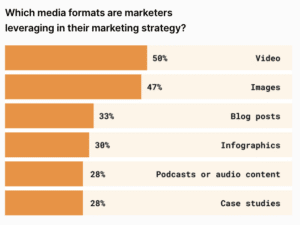
The next insight is where video is actually being used by marketers from an investment. So, looking at this, you can see HubSpot and Wistia surveyed 1500 marketers on the top 6 media formats that they plan to invest in most this year.
Our state of video marketing report also revealed that video continues to lead in terms of budget allocation. Compared to other media formats, such as podcasts, video remains a top choice for marketers. While video production can be costlier, its effectiveness and versatility justify the investment.
This year, we see that same number of companies (41%) are willing to spend up to 26-50% of their marketing budget on video marketing.
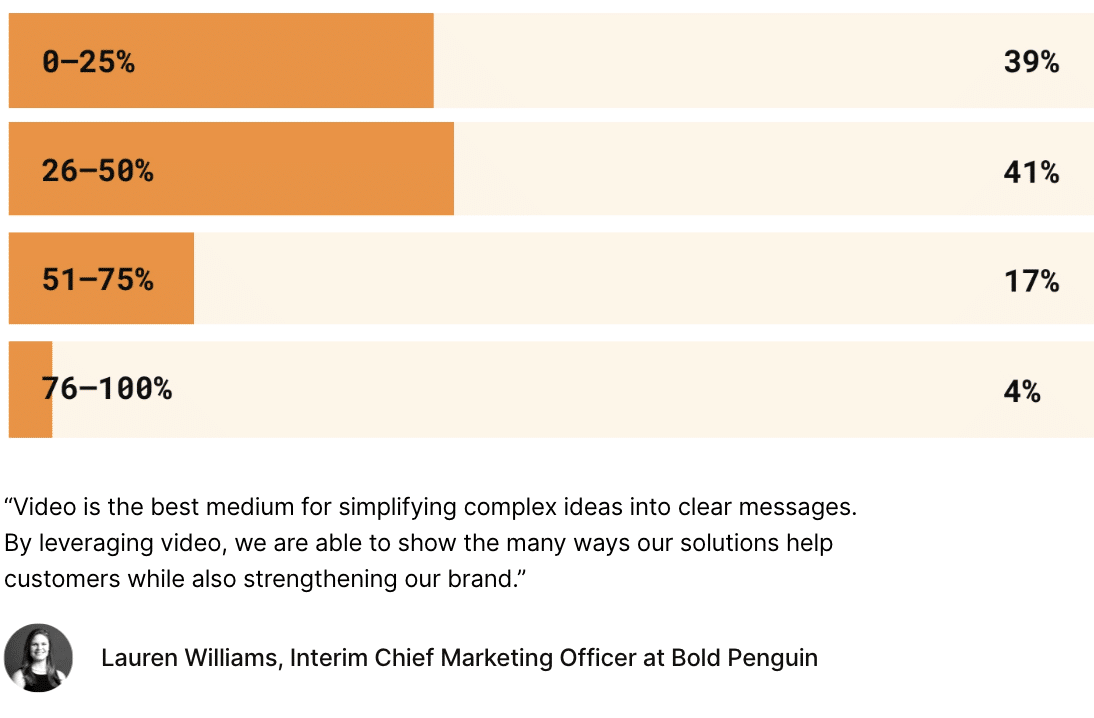
That number is followed by 39% of businesses allocating between 0 and 25% of the marketing budget to video. We also saw an uptick in the number of companies that allocate between 51 and 75% to video, going from 37% to 39% of companies.
The percentage of businesses that spend between 75 and 100% of the marketing budget on video also went from 2% last year, to 7% this year. There definitely is a shift towards making video take the place of honor in marketing priorities.
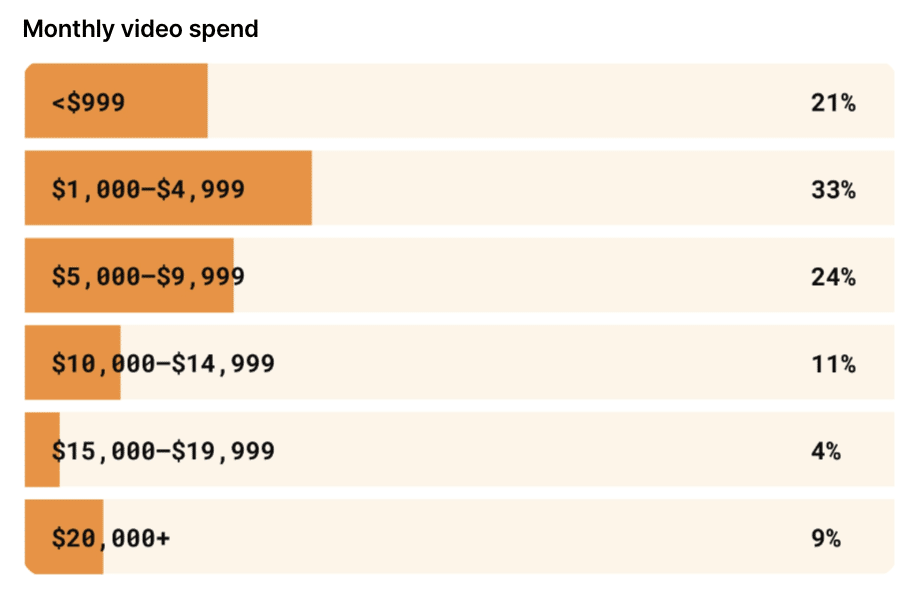
According to the study, monthly investment in video marketing or video ads has remained relatively consistent. Interestingly, the majority of companies still allocate less than $5,000 per month towards video-related activities. This finding highlights the importance of optimizing video strategies for improved online visibility and marketing success.
Marketing challenges solved by video
For marketers, brand awareness is still the top challenge to overcome with video, closely followed by sales.
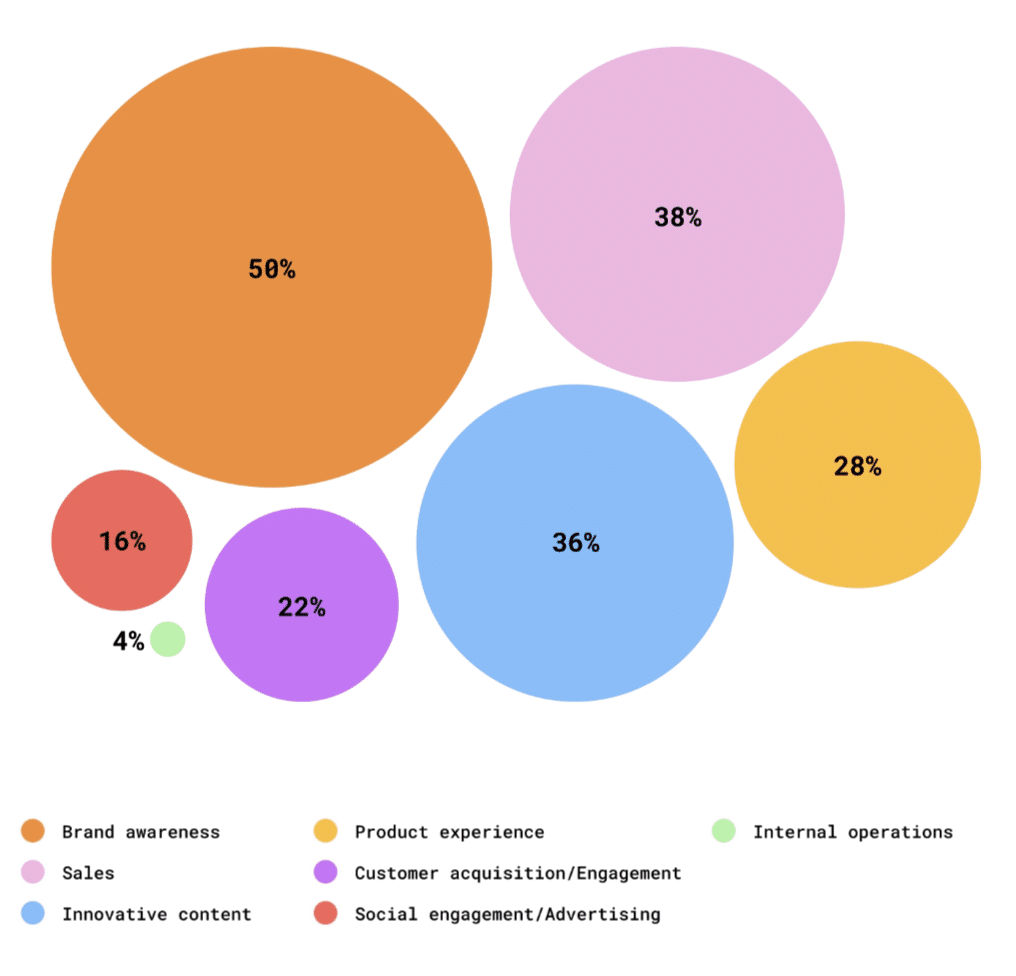
This shows that businesses are seeking more conversions, leads, and revenue, and that they rely heavily on video to reach their target audience.
When it comes to video marketing, B2B companies care about how their audience perceives them — and the experience that comes from interacting with their brand.
Video across departments
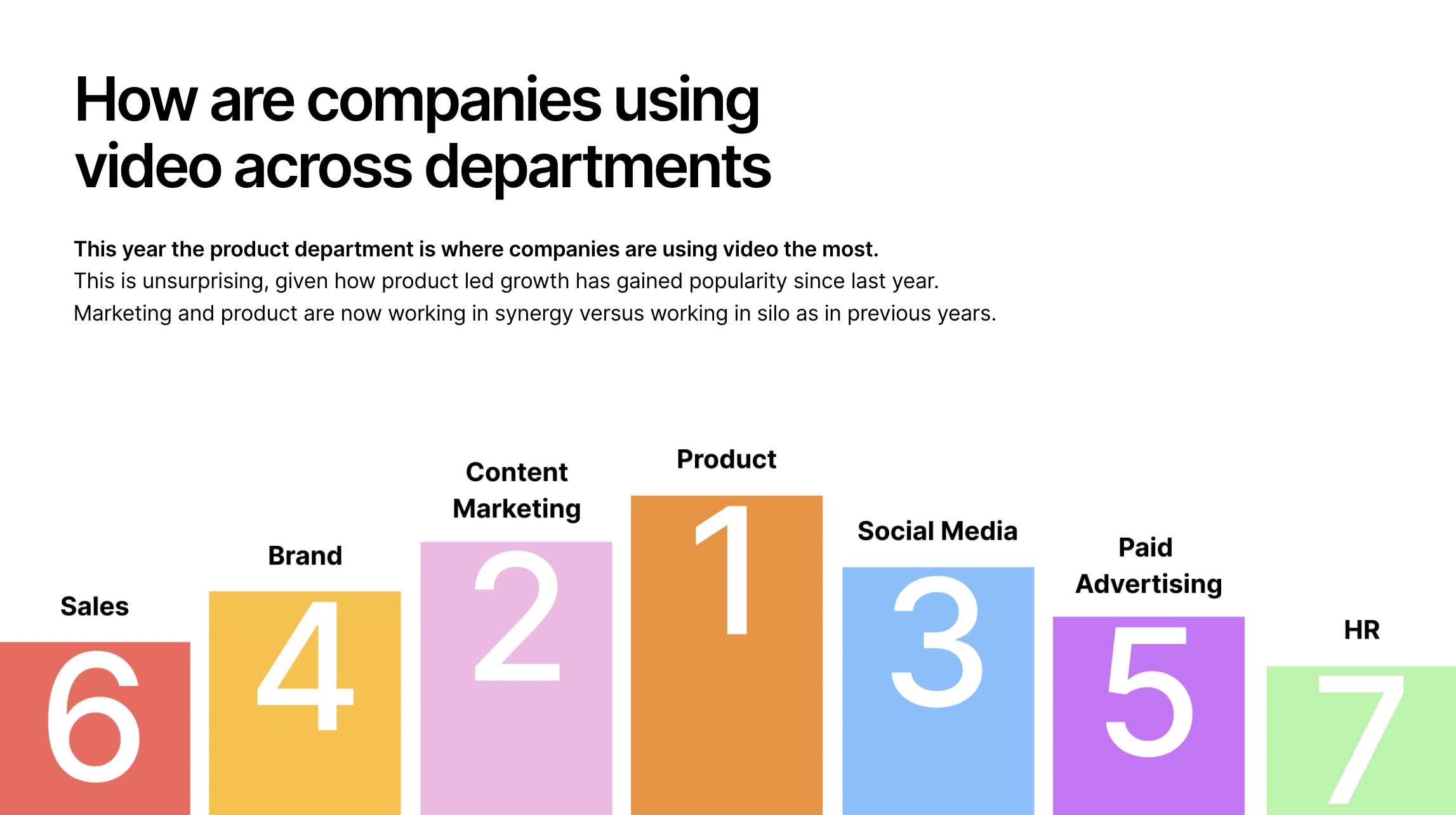
Another noteworthy finding is the shift in the departments using video. In 2023, product-related videos took the lead, reflecting a trend towards mid-funnel content and product launches. Content marketing, social media, and brand-related videos also play pivotal roles.
Case study: How Movember leverages video content

Movember is dedicated to raising awareness about men’s health through impactful events, campaigns, and educational initiatives. For their 2022 campaign, Startfire created a captivating series of six videos, which were later divided across over 70 creative assets to maximise investment and distribution.
The “Mo Like a Pro” video series rocked the digital world with a bold, authentic vibe, inspiring global engagement and meaningful action towards men’s health.
The results were remarkable:
- Nearly 4,000,000+ unique views on TikTok and Instagram, and over 35,500+ reactions.
- 15,000 events organized.
- 330,000 individuals installed the Movember App.
- 107 laps around the Earth run or walked.
- 12 tons of moustache hair grown across the globe.
This success underscores the strategic value of creative video production, which can generate a wide range of compelling content types.
Future of Video Marketing
In conclusion, these studies suggest that video marketing will continue to grow in 2023 and beyond.
The three main drivers are:
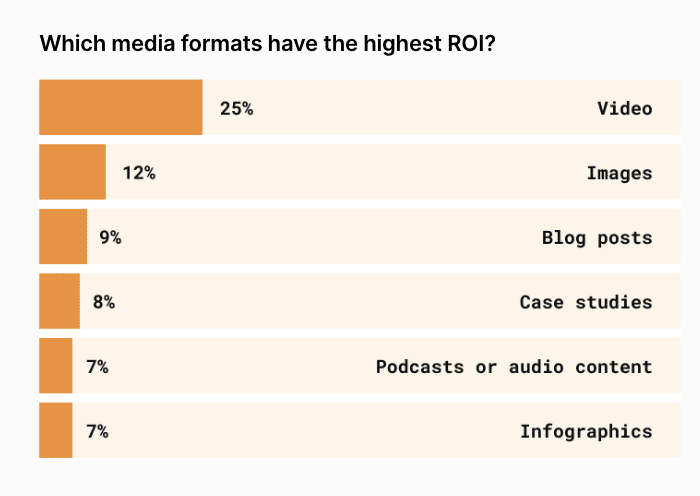
- High ROI: Marketers recognize video as one of the most ROI-effective media formats.
- Widespread adoption: An impressive 88% of marketers incorporate video into their marketing strategies.
- Budget allocation: Many companies are willing to allocate a significant portion of their marketing budgets to video due to its content richness.
Conclusion
As businesses strive to engage their audiences, enhance their brand presence, and drive conversions, video remains a powerful tool that promises significant returns on investment. Stay tuned for the latest trends in the world of video marketing, as it continues to evolve and shape the marketing landscape.
3 Steps to Guarantee Your Video Gets ROI
You’ve heard that video is the most powerful and persuasive form of content on the web….and it is! The data is clear: 52% of marketers believe that video is the type of content that drives the best ROI.
Plus, brands that use video get:
- 3x more monthly website visitors
- 157% more organic traffic
- 88% more time on your website
- 3x more inbound links
- 4x more content consumption
It’s hard to ignore the effectiveness of video, but many healthcare marketers are facing increasingly tight budgets. And because video is more expensive than text, it’s often put on the back-burner.
As marketers, we all have constraints. But it would be a mistake to miss out on the immense ROI that video can provide.
That’s why we’ve developed a process that guarantees your videos will generate ROI.
Check it out…
The Formula for Video ROI
Videos drive ROI based on the following formula:
[Business Impact] x [Exposure] – [Cost] = Expected ROI
Here, the business impact and exposure variables are most important, although cost is certainly an important factor as well.
Business Impact: Your videos need to serve a purpose for your business; they should either help generate leads or move prospects along in your sales process. The degree to which each video achieves one of those two goals is your business impact.
So when you’re just getting started with video, you should prioritize the topics that have the biggest impact.
Exposure: Impact alone isn’t enough. A video may have a very high business impact, but if only one person watches it, it’s not going to generate much ROI. So the second most important variable is getting your video exposure with prospective customers.
Cost: Every business has several video topics that will provide a high business impact and a high potential for exposure (home page explainer videos, for example). With these videos, cost isn’t much of a factor because the potential ROI is so high. But after you’ve created the obvious videos for your business, cost becomes a more significant variable. Even then, you can still ensure ROI by only producing videos that will be used long-term as a strategic asset for your business.
So the question is: how can you choose topics that will have a high business impact, get lots of exposure, and become an asset your sales and marketing teams will use for years to come?
Fortunately, we’ve broken it down into a 3-step process…
Step 1: Choose a Topic with a High Business Impact and Long-Term Value
Because video requires a larger investment than text-based content, you need to choose video topics that have a high business impact.
In other words, your videos need to serve a specific purpose in helping you reach your sales and marketing goals. Otherwise, you’re simply wasting valuable resources on assets that don’t influence your audience — or your bottom line.
Remember that “Business Impact” is one of the most important factors of the ROI equation. So if you get this step right, you’ll be able to focus on ways to lower cost and increase exposure.
Here are four video topic categories that will typically have a higher business impact:
- Videos that Establish Product Demand – When you understand your prospects problems or challenges, you can then position your videos to address those problems and tie them back to the solution your products offer.
- Videos that Move Prospects Through Your Sales Funnel – Video doesn’t just help you close the deal at the end of the sales process. Videos can also play a major role in persuading your prospects to take the next step with you in the buyer’s journey.
- Sales Enablement Videos – By using videos to answer questions and overcome objections, your sales team can help prospects become buyers in a shorter amount of time. That means a shorter sales cycle, more buyers, and higher ROI on those helpful sales videos.
- Turn High-Value Content into Video – Video improves memory recall and is 4x more likely to be consumed than text. Turning any of your content that’s already performing well into video means an increase in consumption and response.
How to choose the right video topics for YOUR business…
If you want to discover high-impact video topics that you can use long-term, just fill out the form at the bottom of the page to schedule a free, no-obligation call with our video marketing strategists.
We’ll learn everything we can about your business and goals, then help you identify profitable topics for your business.
Step 2: Create Your Video the Right Way the First Time
There’s nothing more tragic than a video that misses the mark.
At best, you miss out on a significant chunk of ROI. But at worst, your video flops and you’ll need to shoot it again.
So when you’re creating an asset for your team, make sure that you create it the right way, the first time. That process starts with strategy and pre-production.
At Startfire, our pre-production process focuses on four main areas:
- Budget: Know how much things cost before you commit to including them in the production. If there are big-ticket items tied to the budget, make sure they will have a significant impact on the end product.
- Script Writing: Great video scripts should empathize towards your audience’s problems and desires, and follow a proven copywriting framework.
- Storyboarding: Storyboards paint a picture of the sequence and flow of your video. They also help the production process be more efficient by eliminating any misunderstandings, saving you time and money.
- Production Schedule & Call Sheet: Your production schedule keeps everyone on track during the shoot day. Staying efficient is critical, because extra shoot days will push you over budget. And if you have extra time, you can always film more videos, which drives down your production costs.
The quality of your video matters — both for holding the attention of your viewers, and for persuading them to take action. Spending a little extra time in pre-production will help you craft a high-quality video that will get you long-term ROI.
Step 3: Use the Video Routinely in Your Sales and Marketing
Once your video is complete, it’s time to put it to use.
Remember, exposure plays a major role in your video’s ability to generate ROI. So if it doesn’t get the attention it deserves, you won’t get the results you’re looking for.
That means you shouldn’t post your video in a ghost town.
You either need to:
- Put the video in a place that already gets lots of traffic
- Incorporate the video into a system that ensures it gets used routinely in your sales and marketing processes
Don’t waste a great video by just posting it somewhere on your website or YouTube, expecting everyone who visits to watch and respond to it.
If you want to increase exposure and drive ROI, your videos need to be used routinely.
Here are some examples of ways to ensure your videos get high exposure:
- Host your video on high-traffic web pages: We know that people are 4x more likely to watch a video than read text, so video is a great way to engage your website visitors and keep them on your site — especially on the pages that see the highest traffic.
- Use Your Video in Email Sequences: When prospects see “video” in the subject line, open rates increase 54% on average, and click-through rates increase up to 200-300% when an email includes a video. They also found that those emails converted 21% more recipients into customers, so using video in your email automation can help you see a big jump in ROI.
- Create Email Templates for Your Sales Team: As your sales team follows up with prospects, your videos can help to handle their questions and objections. With a simple click, your videos have a greater impact throughout the sales process.
- Generate Leads with Your Videos on Social Media: Social media is free, right? Regularly scheduling lead-generating videos on social media platforms gives your videos extra reach and engages new prospects at no cost. Just remember not to over do it. We’ve found that you can share a video weekly on Twitter and twice-monthly on Facebook without any negative consequences.
Exposure is a major factor in driving your video’s ROI, as we saw in the ROI equation.Be intentional about where you plan to use your video ahead of time, and what role it will play in your sales and marketing.
Can You Really Guarantee Your Video Will Get ROI?
With tight marketing budgets, getting a return on your video investment needs to be a priority.
Your videos need to be as serious about driving business as you are. They can’t just look pretty or use the latest animation or graphics. They also need to have a high business impact and exposure with your target customers to get the best results.
And that all starts with strategy.