
Pre-Production

Initial phase of producing an animated movie before actual animation begins

What is Pre-Production in Animation

Let’s define pre-production in animation

Pre-production in animation entails various phases. Before we dive into each phase individually, let’s look at the animation pre production definition.

ANIMATION PRE PRODUCTION DEFINITION

What is animation pre-production?

Pre-production is the initial phase of producing an animated movie before actual animation begins. In this phase, the filmmakers prepare and develop the story from scratch. They create characters, environments, and worlds that will form the foundation of the animation movie.

The pre-production phase of animation usually starts with an idea that is then developed into a story. Filmmakers need to create a compelling narrative and characters that are engaging, relatable, and appealing to viewers. They do this by writing a script, storyboarding, and creating animatics.

A successful pre-production process establishes the direction for the entire project. Poor pre-production can result in a subpar animation, poor quality visuals, or even failing to complete the project entirely.

Essential phases of pre-production in animation:

  • Concept development
  • Scriptwriting
  • Storyboarding/Creating Animatics
  • Character and Environment Design
  • Casting

Animation Pre Production Importance

The Importance of Pre-Production

Pre production of animation is so critical that it can make or break an animated movie. It establishes the overall vision of the project and sets the tone for the animation. It also helps the animators to understand what is expected of them and what they need to achieve.

The creative team, including the writer, directors, storyboard artists, and concept artists, come together to work out how the story will look and feel before the animation begins. In this way, pre-production maps out the storyboard, establishes visual themes, defines the characters, and sets the mood of the movie.

Inside Pixar

It also ensures that the animation team has clear guidelines and direction for the overall look and feel of the animation, making it easier to communicate with the entire team about the best way to proceed. It provides filmmakers with a roadmap of sorts, that can help keep the animation movie on track.

In addition to providing guidance for the team, pre production of animation can also help identify any problems in the animation process. By developing a storyboard, filmmakers can see what is working and what requires more attention. Animators can then adjust aspects of the animation before the actual work of animation begins, thus saving a significant amount of time and resources.

Pre Production of Animation

Pre-Production Stages in Animation

Pre-production is a complex process, and it typically takes several months or more to complete. The following are the stages of pre-production that filmmakers go through to create an outstanding animation movie.

Idea and Conceptualization

The first stage of pre production of animation is the idea and conceptualization phase. In this stage, filmmakers come up with an idea or story for their animated movie. They brainstorm and refine their concept, deciding on the genre, tone, and theme of the movie.

In this video, Pete Docter filmmaker and Chief Creative Officer at Pixar breaks down the inspiration for the concept of Soul. He goes into the research, collaboration, and concept development for the Oscar-nominated animated film.

Pete Docter Explains the Inspiration Behind Pixar’s Latest Film, ‘Soul’

Scriptwriting

Once the concept is in place, the scriptwriting stage begins. The screenwriters start developing the storyline and characters that will eventually come to life on the screen. A good script establishes a basis for the characters and the story.

Creating Animatics

After scriptwriting, comes the animatic stage. An animatic is an animated storyboard that helps filmmakers to visualize the story and the pacing of the animation. This stage allows them to make adjustments to the storyline, sequencing, and pacing of the animation. Take a look at how the animatic of the opening scene of Up compares to the final animation.

Up “Married Life”  •  Pixar Side by Side

Character and Environment Design

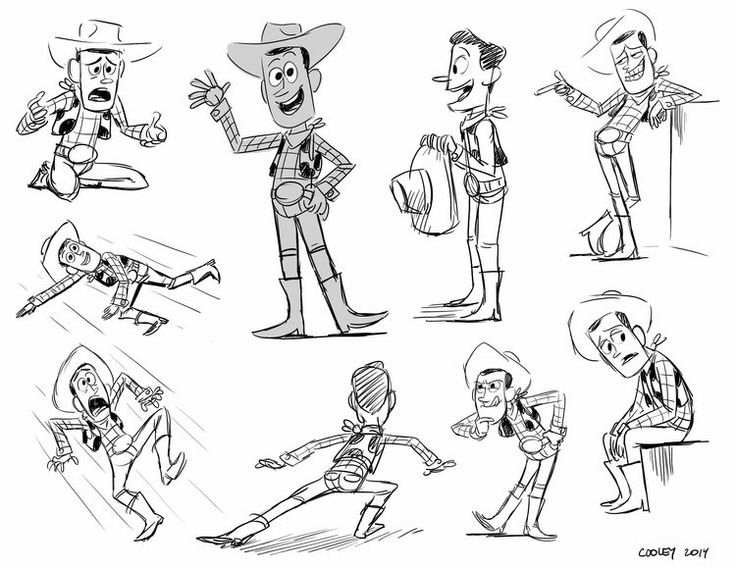
During this phase, the animators work on character design and environment design. They create characters and develop their appearance, looks and customize settings that will make the world that the characters will live in.

What is Pre Production in Animation Pixar character design Woody in Toy Story

Pixar character design  •  Woody in Toy Story

Voice-Actor Casting

During the pre-production phase of an animated film, casting voice actors is a crucial part of the process. It involves finding the right voice for each character, ensuring that they bring out the personality, tone, and characteristics that the animators have in mind. A talented casting director will scour through hundreds of auditions, listening for the right voice that will bring the character to life.

Finalizing Pre-Production

The final phase of pre-production includes hiring the team, setting up the production schedule and budget, raising funds, and creating a detailed plan. The team finalizes the storyboard and script and hands it over to the animators to start the animation.

The importance of pre-production in animation can be seen clearly in some of the most successful animated films that have been produced.

In the case of the Toy Story series, the pre-production phase was extensive, taking almost four years. Another example is the movie Frozen, which had a prolonged pre-production process, with an entire year spent on character design and creating the animation style. This pre-production time resulted in a visually appealing film that won several Academy Awards.

Pre-production is an essential phase in the animation movie-making process. This phase sets the foundation for an outstanding animated movie.

Up Next

What is Animation?

Pre-production is only one component of creating an animated film. For a full history and breakdown of the various types of animation, check out our next article where we dive deep into the world of animation.

lanning a video or sequence in a film doesn’t come second nature to most filmmakers. Serious prep is required. Lucky for you, there are tools to make this easier. Laying out your vision in a storyboard is one way to do it. What is a storyboard you may ask? It is a roadmap that will guide your journey from script to screen. 

To really grasp the benefits of storyboarding, we’ll go beyond a simple storyboard definition to explore how filmmakers like Ridley Scott and the Coen Bros. rely on this fundamental process and how easy it will be for you to do the same on your next project.

How to Make a Storyboard in Startfire

Storyboard Definition

First let’s define storyboard

Alfred Hitchcock was notorious for his ‘boards’ — precisely crafting the movie in his head and on the page. He was so detailed, in fact, that actually shooting the film was boring. 

All the interesting work had already been done.

Does this mean that you have to be as precise as Hitchcock? Absolutely not. Storyboarding is a tool that filmmakers bring into their process but everyone is different. In reality, defining “what is a storyboard” is actually up to the individual and what they make of it.

We’ll begin with a quick storyboard definition before jumping into some storyboard examples and video interviews with filmmakers on their individual approaches for how to make a storyboard.

STORYBOARD DEFINITION

What is a storyboard?

A storyboard is a visual representation of a film sequence and breaks down the action into individual panels. It is a series of ordered drawings, with camera direction, dialogue, or other pertinent details. It sketches out how a video will unfold, shot by shot.

It’s is similar to a trial-run for your finished film, video, or commercial, laid out in a comic book-like form.

What’s a Storyboard?

  • Drawings, sketches, reference images or photographs to represent each frame.
  • A description of the shot — any relevant information on the action, dialogue, or composition.
  • Shot specs — shot size, lens length, two-shot, etc.
  • Arrows to indicate camera and/or character movement or how each shot connects to the next.

It’s one thing to define storyboards — but what does a storyboard look like? From simple stick figures to detailed sketches, the quality or content of each panel is really a secondary concern as long as the board serves its purpose for the filmmakers.

We’ve imported selected boards from Austin Powers in Goldmember into StudioBinder’s storyboard software to give you a better idea of the common elements found in a board.
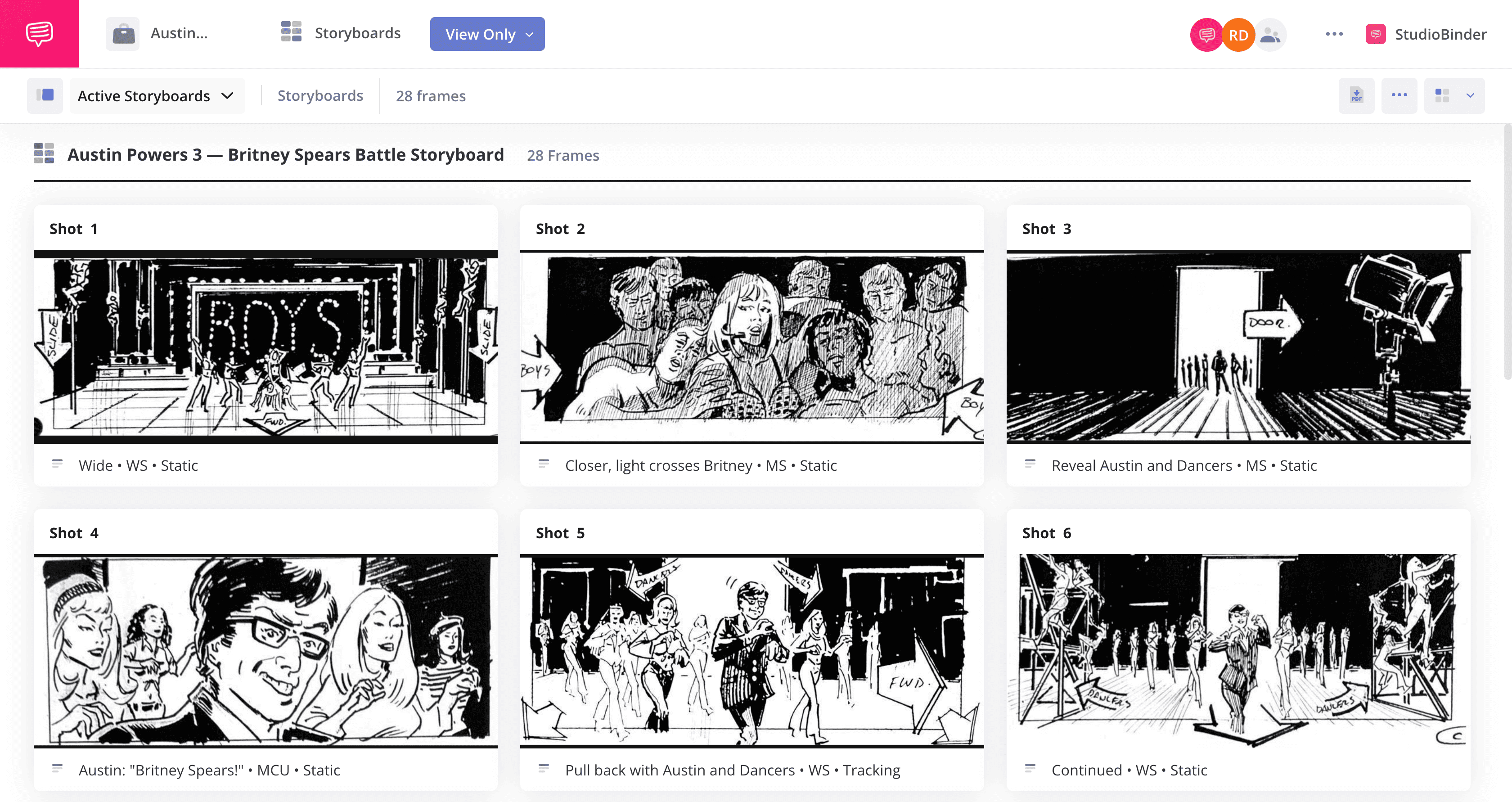
What is a Storyboard Austin Powers Britney Spears Storyboard StudioBinder Storyboarding Software

Storyboard Format and Layout

Traditional vs. thumbnail

Storyboards can contain as much information as you want. Again, this is a tool to help you with the pre-production process so don’t feel completely tied to one storyboard format over another.

There are two basic versions of storyboard format: traditional and thumbnail. In short, the difference between these two layouts comes down to how much detail you include. 

Traditional storyboards are what we see above — basic pencil sketches that include detailed information like arrows for camera movement, characters, props, etc.

There are also thumbnail style storyboards that don’t have any writing. Keep in mind I use the term thumbnail in this article and was referring to the image, not this style board. Again, the more detail you put into it, the easier it will be to execute later.

They’re not used as often as detailed ones. But then again, if it’s just you, or a small team, writing might not be necessary. Here’s an example of a thumbnail board from a scene that needs no introduction — the shower scene from Hitchcock’s Psycho.
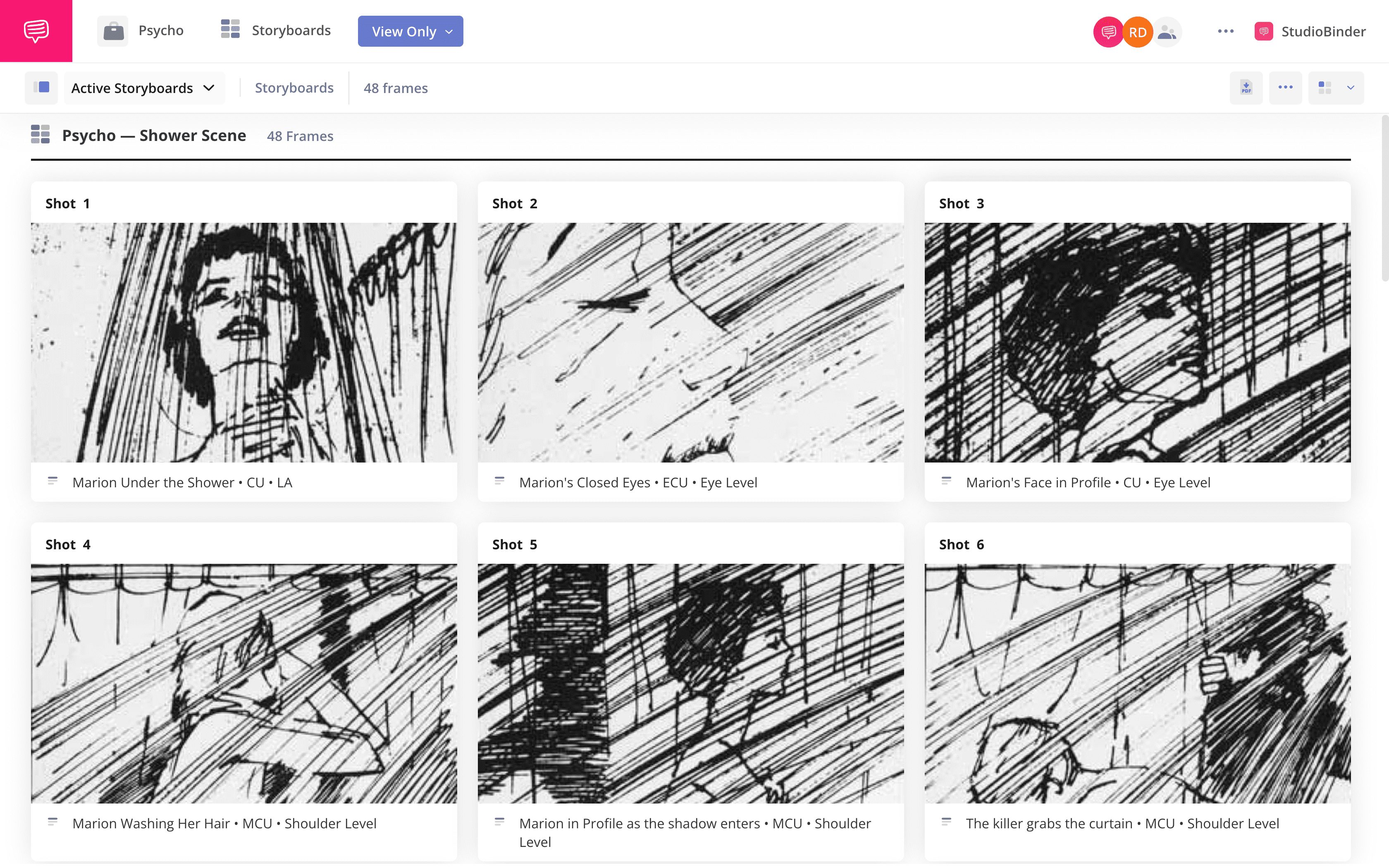
What is a Storyboard Psycho Storyboard Scene StudioBinder Storyboarding Software

Psycho shower scene storyboard

Storyboard Examples

How directors approach boards

It’s easy to define “what is a storyboard” but to fully understand what they are how they work, let’s look at some storyboard examples.

Hitchcock wasn’t the only director to make storyboards part of his process. Many directors make a storyboard for every single scene while others only use them for more complicated sequences. There are some directors that forego the process entirely. 

Here’s a storyboard example from the Coen Bros. first feature film, Blood Simple. Their approach to storyboarding, like everything else they do, is completely unique to them.

In this video, we get to see their original storyboards overlaid with the finished frames as they discuss their thought process.

Initial boards and final images from Blood Simple

If you’re familiar with Ridley Scott’s career, you’ll remember that he began as an artist working on commercials. Once he became a director, he was able to bring that artistic talent into making his own boards.

With films like Blade Runner and Alien, it should be clear that storyboarding helps him craft intricate and layered imagery. 

In this video, Scott discusses his personal relationship with storyboards at length as we watch a side-by-side comparison for his film Hannibal.

Ridley Scott takes storyboarding very seriously

Most of the time, a storyboard is constructed to match what’s already been written in the script but they can also become deeply tied to the actual storytelling process. The importance of a storyboard in animation cannot be overstated.

An animation storyboard and animatics are fundamental steps, not just to refine the specific animation and movements but to craft story beats and character behavior at the same time.

Here’s Josie Trinidad, the head of the story team for Ralph Breaks the Internet, on how she brings story and character considerations into an animation storyboard.

How to refine character and story with a storyboard

Our last storyboard example takes this idea of storyboard/script hybrid to the extreme. For his return to the Mad Maxuniverse, director George Miller was aiming for a near-silent action film. 

This “graphic novel” approach was his initial guide to crafting the action, story and characters. Only then was an actual script crafted. This is obviously the reverse of how storyboards are made but based on how successfully the film captures intense and elaborate action, maybe he’s on to something.

Mad Max: Fury Road, when a storyboard comes before the script

Now that we have fully answered the question of “what is a storyboard,” you should be fully prepared to start making your own.
Pre-Production
Pre-Production

Examples of Pre-Production:

Scroll to Top

Let's start!

Made once - used many times

This site is protected by reCAPTCHA and the Google Privacy Policy and Terms of Service apply.